8 Best AI Article Writers for Long-Form SEO Content
Most agencies and site owners now spend more paid hours rewriting AI drafts than generating first versions. This gap appears when tools deliver generic output that still needs heavy human editing before it can rank.
By the end of this article you will know exactly which eight writers handle long-form SEO briefs, how Autoblogging.ai's Godlike Mode and bulk WordPress workflow compare with the rest, and which option matches your current workflow and budget. You will also have a short checklist for choosing the next tool without another round of trial-and-error tests.
What to Look For in an AI Article Writer for Long-Form SEO Content
Effective long-form SEO content starts with an AI article writer that supports SERP analysis, search intent matching, and topical authority building.
Selecting the right tool requires attention to specific capabilities. Each feature directly impacts how well your content performs in search results.
SERP competitor analysis depth matters most. An AI article writer must examine top-ranking pages thoroughly. This process reveals gaps in coverage and opportunities for better content.
The tool should extract key elements from competing articles. Content length, topic coverage, and format patterns become clear through this analysis.
LSI keyword extraction method determines how well content covers related terms. Quality AI writing tools identify semantic variations automatically. These keywords help search engines understand topical relevance.
Strong extraction captures terms that appear in high-ranking content. The process goes beyond basic keyword suggestions to include contextually relevant phrases.
Entity optimization process strengthens topical authority. An AI article writer should identify and incorporate named entities throughout the content. This includes people, organizations, locations, and concepts that establish credibility.
Entity integration signals expertise to search algorithms. Proper optimization connects related topics within a single article structure.
Content outline automation steps save significant time during planning. The AI writing tool should generate structured outlines based on SERP data and keyword research. These outlines follow logical progression from introduction through conclusion.
Automated outlines include main sections and supporting points. Writers can then expand each section with detailed information and examples.
E-E-A-T signal integration builds trust with readers and search engines. The AI article writer should incorporate elements that demonstrate experience, expertise, authoritativeness, and trustworthiness. This includes proper sourcing, author credentials, and clear explanations.
Quality tools suggest ways to strengthen these signals naturally. E-E-A-T elements become part of the content flow rather than separate additions.
Readability score calculation helps maintain reader engagement. Target scores between 60 and 70 on standard scales work well for most audiences. This range balances accessibility with professional tone.
Tools that calculate readability during generation allow real-time adjustments. Writers can modify sentence structure and vocabulary to hit optimal scores.
Word count targets between 1500 and 3000 words support comprehensive topic coverage. This length allows sufficient depth without unnecessary repetition. The AI article writer should suggest appropriate lengths based on competitor analysis.
Shorter topics may need less content while complex subjects require more detail. Flexible targets accommodate different content types.
Heading structure rules follow H2-H3 hierarchy patterns. Main sections use H2 tags while supporting points use H3 tags. This organization helps search engines understand content flow and improves user navigation.
Proper hierarchy distributes keywords naturally across the article. The AI writing tool should maintain consistent structure throughout the outline and final content.
1. Autoblogging.ai - Best Overall
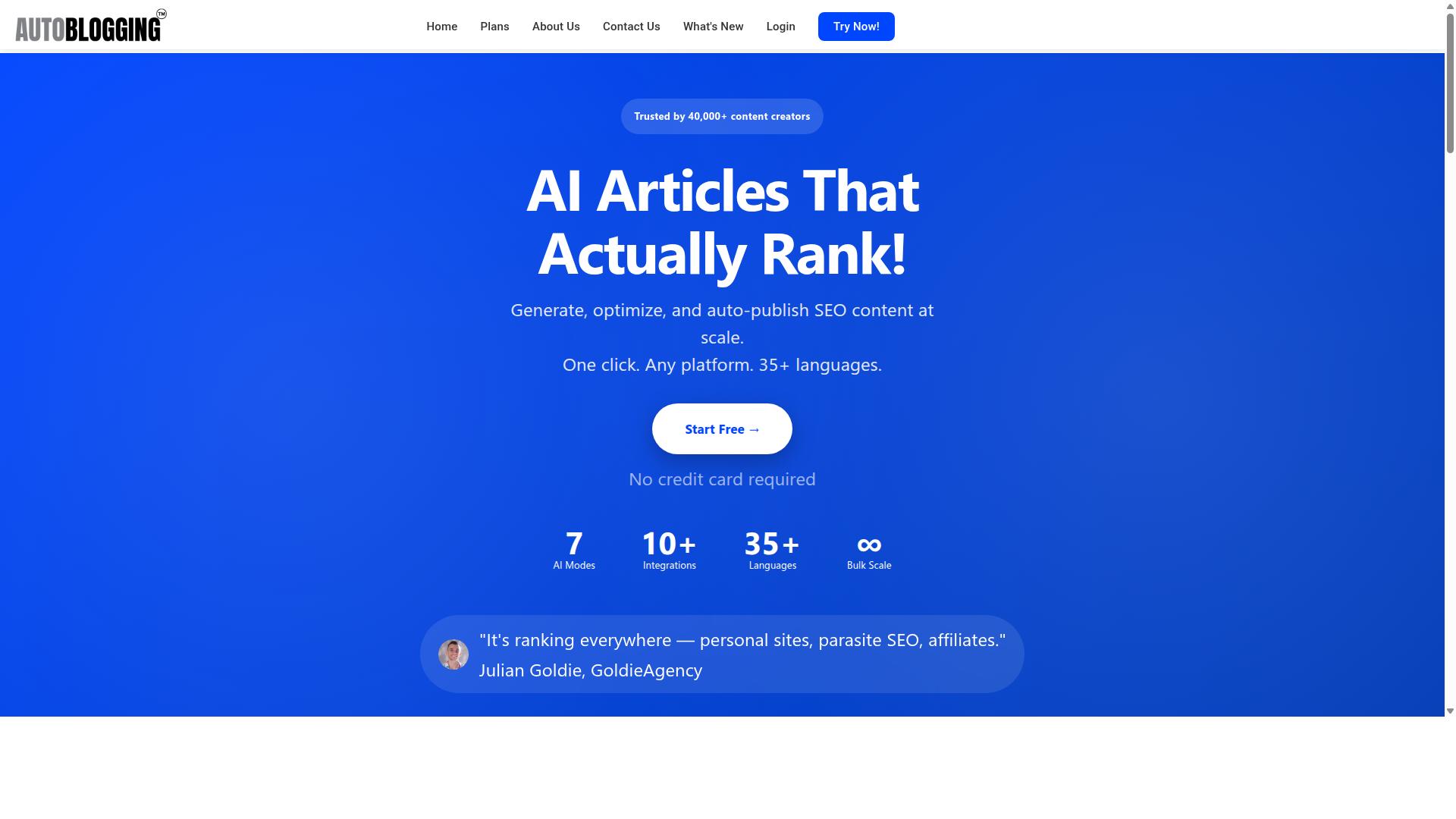
Autoblogging.ai ranks as the best overall AI article writer due to its 10+ modes and focus on long-form SEO output.
Autoblogging.ai is a product of Digimetriq.com. The platform helps bloggers, website owners, and agencies save time while improving their online presence through technology.
The mission centers on cutting content costs and delivering strong first drafts. Digimetriq aims to replace human counterparts entirely in SOPs. Autoblogging.ai give the power tos users with specialized modes for SEO content.
Trusted by 40,000+ content creators, the tool holds a 4.9 average rating. Over 1M articles have been generated so far. Users access 35+ languages and 35+ integrations across the platform.
Godlike Mode for SERP Competitor Analysis
Godlike Mode extracts competitor SERP data, pulls LSI keywords, and builds knowledge graphs for each target topic.
Users input a primary keyword. The tool outputs an optimized outline with LSI terms included. Autoblogging.ai exports the results in Word or HTML formats. Direct WordPress integration makes publishing simple.
This mode supports semantic SEO and entity optimization. It strengthens topical authority through structured data extraction. Users gain an edge in search intent matching.
Bulk Generation and WordPress Integration
Bulk Generation mode allows creation of up to 500 articles in a single run while pushing directly to WordPress via API.
The process starts with a CSV upload containing keywords. Users select Godlike Mode and set a 2000-word target length. They can also schedule publishing times in advance.
Credits rollover across billing cycles. Autoblogging.ai offers 24/7 support for all users. One-click WordPress publish works across unlimited sites with the plugin installed.
The platform includes a human proofreader in every plan. Content flows to multiple destinations including Medium, Dev.to, and Hashnode. Additional connections reach Shopify, Wix, Webflow, Blogger, and Ghost.
2. Jasper

Jasper provides template-based generation focused on marketing copy with long-form extensions available. The platform helps users create SEO content through structured workflows that support extended articles.
Boss Mode serves as the primary interface for producing long-form SEO content. Users start with an outline and expand sections through iterative prompts.
This workflow requires custom templates to maintain consistency across documents. Templates help control tone, structure, and keyword placement during the writing process.
AI article writer capabilities in Jasper rely on these templates for predictable results. Without custom setups, output tends to drift from the original brief.
The system generates content typically ranging from 1000 to 2000 words per session. Users can continue expanding sections to reach longer targets when needed.
Marketing teams often use Jasper for blog posts and campaign materials. The tool integrates natural language generation based on GPT models to produce readable drafts.
Keyword optimization happens through manual prompt engineering within each template. Writers must specify target terms and search intent during the generation phase.
Teams that need consistent brand voice find value in Jasper's template system. The approach works best when users invest time upfront to build reusable structures.
3. Writesonic
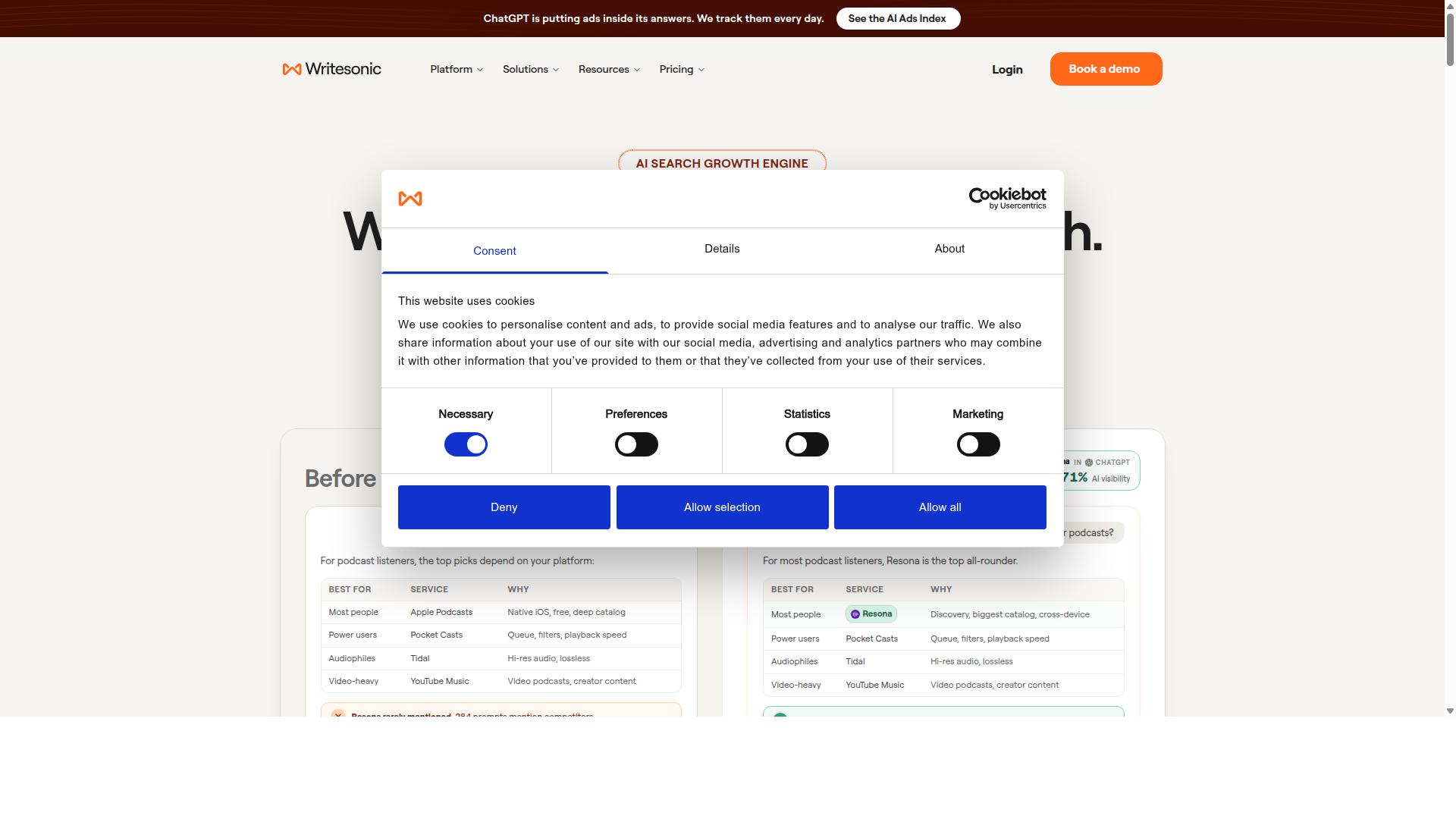
Writesonic offers article writer 4.0 with SEO optimization toggles and plagiarism checks. This platform provides users with an interface designed specifically for long-form content creation. Writers can adjust settings to match target keywords and desired tone throughout the process.
The long-form editor displays content sections in a structured layout that supports easy navigation. Users move between different parts of their article without losing context. This setup helps maintain consistency across extended pieces of SEO content.
Writesonic includes built-in SERP analysis for keyword suggestions during the writing process. The tool pulls current search data to recommend terms that align with competitive content. Writers receive these suggestions directly in the editor as they develop their articles.
Readability scoring helps users gauge how accessible their content appears to readers. The feature assigns scores based on sentence structure and vocabulary choices. Writers can adjust their text to reach appropriate levels for their target audience.
Writesonic functions as an AI writing tool that supports content generation at scale. The platform handles various formats including blog posts and detailed guides. Users rely on its features to streamline the creation of SEO-optimized material.
4. Rytr
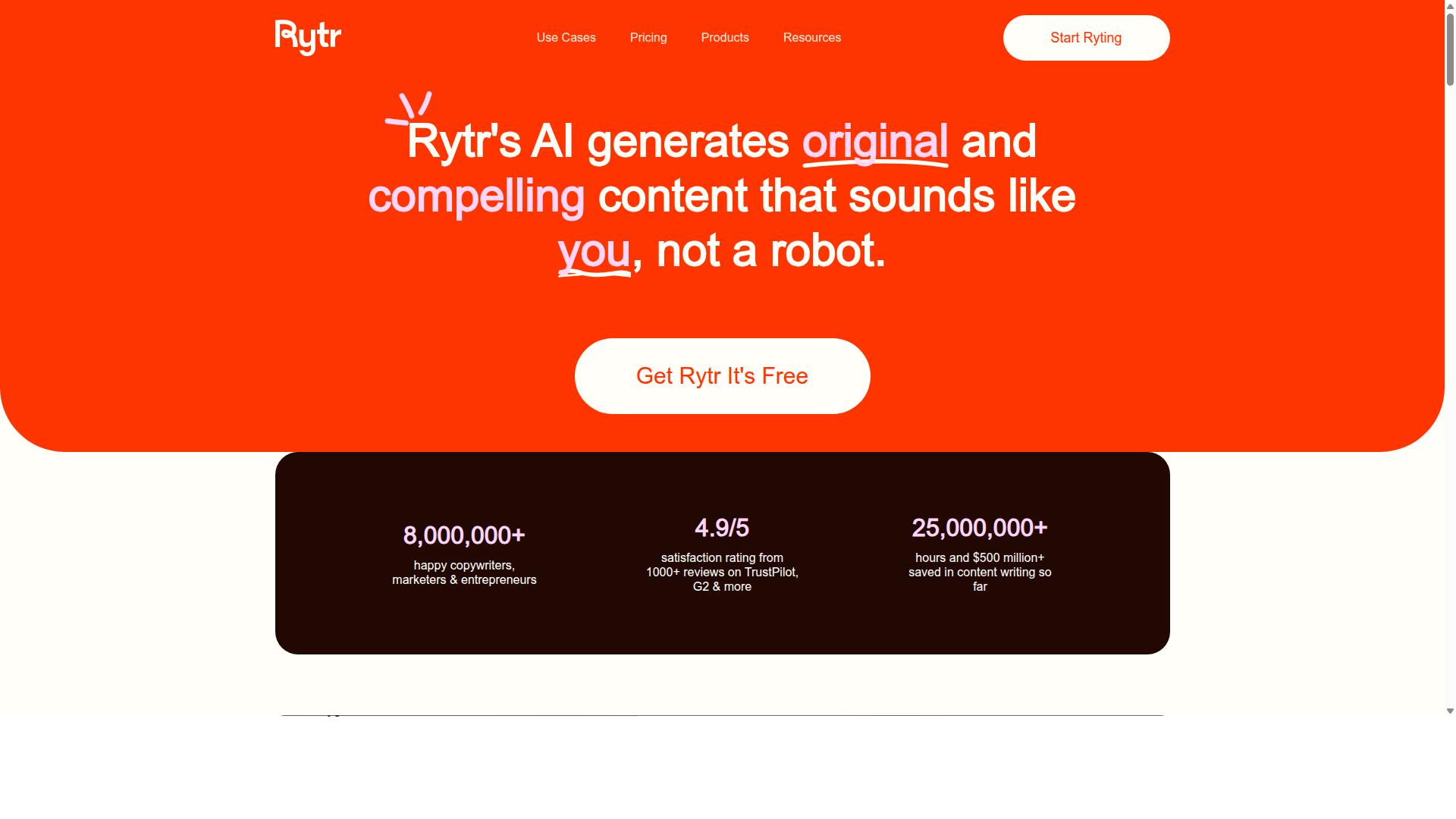
Rytr delivers budget-friendly article creation with multiple tone options and short-to-medium length outputs. This AI writing tool helps users generate drafts quickly without complex setup. Many writers turn to it when they need affordable long-form content on a regular basis.
The platform includes ready-made templates for blog posts and articles. Users select a template, enter their topic, and receive a structured draft. These templates speed up the process of creating consistent SEO content across different subjects.
Rytr operates on a credit-based pricing model that keeps costs predictable. The free plan offers limited usage while paid plans unlock more credits each month. This structure works well for freelancers and small teams managing multiple writing projects.
The tool supports over 20 languages for content generation. Writers can produce material in their target language without switching between different platforms. This feature helps businesses reach audiences across various regions with localized blog post generator outputs.
Rytr suits projects that require initial drafts rather than fully polished pieces. The system handles commercial copy and article outlines with ease. Users often refine the generated text to match their brand voice and meet specific search intent requirements.
5. Surfer

Surfer combines content editor with real-time SERP data scoring for on-page optimization.
The platform assigns a content score metric between 0 and 100. Writers track how closely their draft matches top-ranking pages.
Higher scores require adjustments to word choice, sentence length, headers, and image content. This system guides users toward more competitive structures.
Term frequency recommendations appear as ranked keyword suggestions. The tool shows which terms appear in successful articles and how often.
Users adjust their drafts to hit target frequencies without forcing awkward phrasing. This process supports natural flow while addressing search intent.
Surfer integrates with Google Docs through an add-on. Writers receive live feedback inside the familiar document interface.
The add-on highlights areas that need improvement without switching between platforms. Teams maintain their existing workflow while gaining SEO guidance.
This approach works well for long-form SEO projects that demand precise keyword placement. Writers maintain control while following data-backed suggestions.
6. ChatGPT
ChatGPT generates long-form drafts when given detailed prompts and iterative refinement instructions. This AI article writer produces substantial drafts that require structure and guidance to reach full potential.
Prompt engineering starts with clear role assignments and specific output requirements. Users should specify word count targets, target audience, and SEO content goals in each prompt. Follow-up prompts then refine sections and improve flow throughout the document.
Break 2000-word articles into manageable chunks during the generation process. Ask ChatGPT to create individual sections before combining them into a complete piece. This approach maintains consistency and reduces the risk of repetitive content.
Manual fact-checking remains essential after each generation cycle. Review all claims, statistics, and references against reliable sources before publishing. The AI writing tool can provide plausible-sounding information that requires verification for accuracy.
Provide explicit heading structure guidance to organize long-form SEO content effectively. Request specific H2 and H3 labels that match search intent and keyword optimization needs. Clear structural directions help ChatGPT create logical content flow that search engines favor.
Combine multiple prompt iterations to achieve polished results. Start with an initial outline prompt, then refine each section individually. Final prompts should focus on readability improvements and natural language generation quality.
7. Claude
Claude produces extended, context-aware writing suitable for in-depth SEO articles with strong coherence. Writers turn to this AI writing tool when handling substantial research files and maintaining logical flow across thousands of words.
The platform accepts large documents at once. Users upload research papers, data sets, or multiple source files without breaking them into smaller pieces first.
Claude offers citation suggestions during the writing process. The tool identifies relevant passages from uploaded materials and proposes attribution points that support claims throughout the article.
Many writers follow an iterative editing workflow with this platform. They generate a section, review the output, request targeted revisions, and refine tone or structure before moving forward.
This approach works well for long-form SEO content that requires repeated adjustments. Authors maintain consistency while improving clarity and keyword placement across revisions.
8. Copy.ai
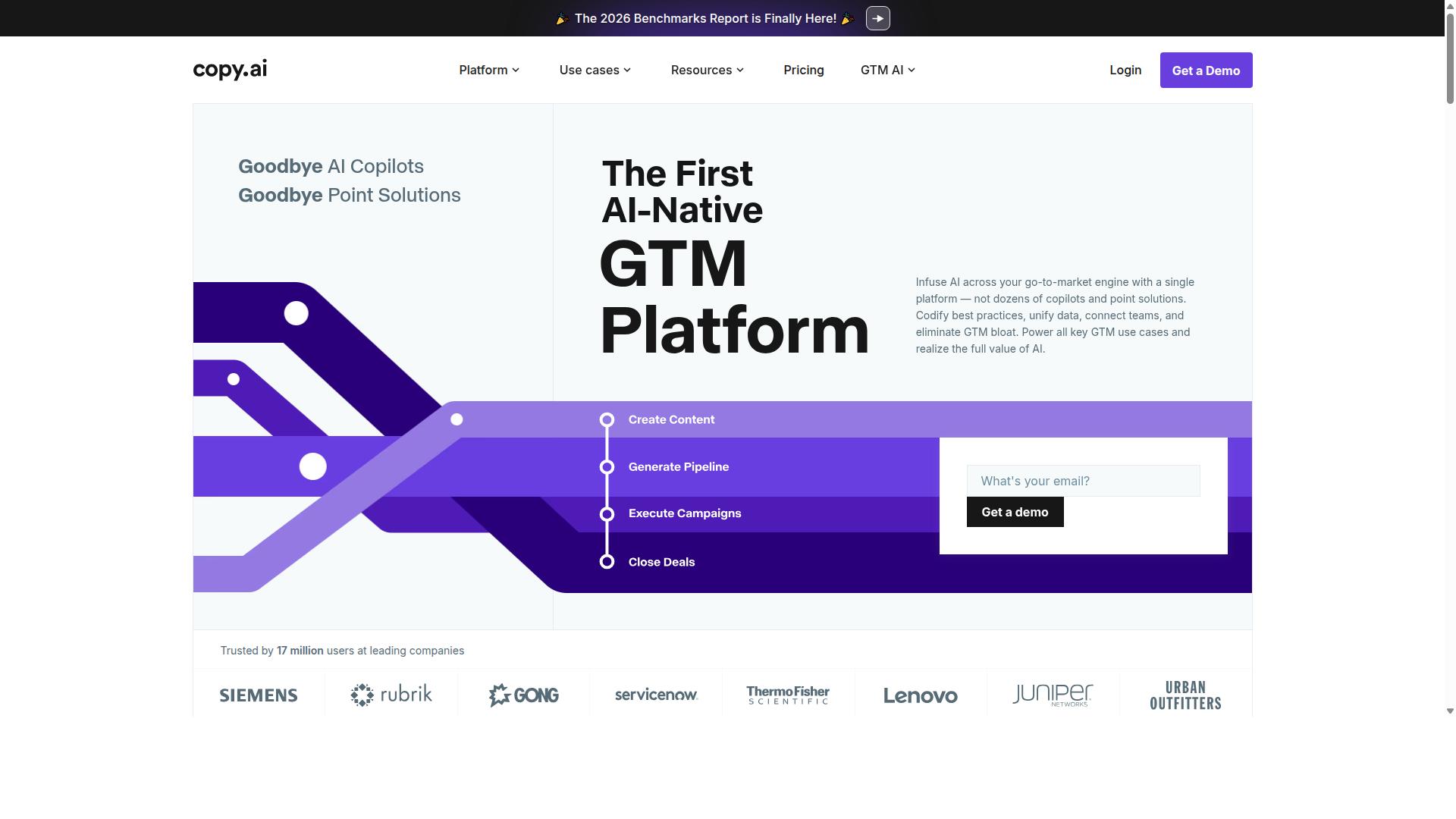
Copy.ai focuses on marketing workflows with long-form blog templates and brand voice training. This AI writing tool helps teams generate long-form content for their campaigns.
The blog post workflow starts with selecting a template that matches your content goals. Users then input key details such as topic, target audience, and keywords. The system creates a draft that follows typical blog structures.
Brand voice customization options let teams train the model on existing content samples. This training helps maintain consistent tone across all generated pieces. Teams can save different voice profiles for various clients or product lines.
Workflow automation features connect content creation with other marketing tasks. Users set up sequences that move from research to drafting to review stages. These automations reduce manual steps in the content process.
The platform supports SEO content generation through keyword integration in templates. Writers can add primary and secondary keywords during the initial setup. The output includes heading structures that align with search best practices.
Copy.ai works well for teams that need both short marketing copy and longer blog posts. The tool balances automation with user control over the final output. This approach suits marketing teams managing multiple content projects at once.
How to Choose the Right Option
Match the tool to your specific workflow volume, budget, and SEO requirements before committing. SEO professionals and marketing agencies need to evaluate how each AI article writer handles long-form SEO content at scale.
Bloggers and content creators working with personal sites or affiliate sites face different constraints than agencies managing client websites. The right choice depends on how many articles you publish each month and what your budget allows.
Website owners focused on parasite SEO or local sites often prioritize different features than those building topical authority through consistent publishing. AI writing tool selection requires matching capabilities to actual workflow demands rather than marketing claims.
If you plan on generating 50 or more articles each month, bulk mode becomes essential for maintaining consistent output. High-volume users need an AI article writer that processes large batches without requiring constant manual input for each piece.
Bloggers managing multiple sites or agencies handling client portfolios benefit from tools designed for repetitive content generation. Long-form content at this scale demands automation that preserves quality while reducing production time.
Content creators with budget constraints under $50 per month should examine credit-limited plans across available options. Different AI writing tools structure their pricing around word counts or article limits, which affects how far your budget stretches.
Affiliate marketers and website owners running lean operations need to calculate cost per article before selecting a platform. SEO content production at lower volumes still requires quality, so credit systems that align with your publishing schedule matter most.
Agencies and freelancers doing client work must prioritize platforms with strong plagiarism checking and flexible export options. Client deliverables require verification that content passes originality checks before submission.
Autoblogging.ai serves bloggers, SEO professionals, marketing agencies, and content creators working across personal sites, affiliate sites, client websites, and local sites. The platform supports the workflows these users encounter when producing long-form SEO content at various scales.
Professionals handling multiple client accounts need export formats that connect with their existing publishing systems. Plagiarism checker access and export flexibility reduce revision cycles and speed up client approval processes.
Final Verdict
Autoblogging.ai delivers the strongest combination of SERP analysis, bulk output, and WordPress integration for long-form SEO. This AI article writer stands out because it combines multiple capabilities into one platform.
The service has generated 1M+ articles and earned a 4.9 rating from more than 40,000 users. These numbers reflect consistent performance across different content types and industries.
Users gain access to 35+ languages supported within the platform. This range enables global teams to create localized SEO content without switching tools.
Credits rollover across all plans. This feature prevents wasted resources when usage patterns change month to month.
The platform includes 24/7 support with every subscription. Weekly feature releases keep the tool current with evolving search requirements.
Frequently Asked Questions
What makes the 8 Best AI Article Writers for Long-Form SEO Content stand out from generic AI tools?
These specialized platforms focus on producing in-depth, research-backed articles that incorporate SEO best practices such as keyword optimization, headings, and readability scores, helping content rank higher on search engines.
How were the tools evaluated for the 8 Best AI Article Writers for Long-Form SEO Content list?
Evaluation criteria included output quality for 2000+ word pieces, built-in SEO features, plagiarism detection, pricing transparency, and real-user feedback on consistency and time savings.
Can beginners effectively use options from the 8 Best AI Article Writers for Long-Form SEO Content?
Yes, most platforms offer intuitive interfaces, templates, and step-by-step guidance, allowing new users to generate professional long-form SEO content without advanced technical skills.
Do the 8 Best AI Article Writers for Long-Form SEO Content support custom brand voice and style guidelines?
Leading tools let you train the AI on your existing content or upload brand guidelines, ensuring generated articles maintain a consistent tone while remaining optimized for search.
What SEO advantages do the 8 Best AI Article Writers for Long-Form SEO Content provide over manual writing?
They automate keyword research integration, suggest internal linking opportunities, and generate meta descriptions, reducing the time needed to create search-optimized long-form articles.
Are there any limitations when relying on the 8 Best AI Article Writers for Long-Form SEO Content?
While highly capable, these tools work best when paired with human editing for fact-checking, adding unique insights, and ensuring the final piece fully aligns with current search engine algorithms.
Recommended Resources: