10 WhatsApp Bulk Message Sender Tools for Small Businesses
You need to send bulk WhatsApp messages without getting your number banned, but the tool choices all blur together. Most small businesses pick the wrong platform because they focus on price first and miss the API and automation requirements that actually matter.
This guide ranks 10 WhatsApp bulk message sender tools, including Com.bot, WATI, Twilio, and seven others. By the end, you will know the exact criteria for evaluating each option and have a clear number one pick for your business size and use case.
What to Look For in WhatsApp Bulk Message Sender Tools
Before comparing tools, know the five non-negotiable features that separate a compliant bulk sender from a spam cannon. The wrong choice can get your number banned permanently, so these criteria protect your business account and your reputation.
Official WhatsApp Business API integration is the first and most important requirement. Unofficial tools that rely on web scraping or automation tricks carry a high ban risk, and they can fail without warning. The official API keeps your messages legitimate and gives you access to template messaging features that consumers trust.
Opt-in consent management is not optional under WhatsApp policy. You need a system that tracks who agreed to receive your messages and respects opt-outs automatically. This protects your delivery rate and keeps your business compliant with data protection rules.
Rate limiting and session timeout controls prevent your account from looking like a bot. Good tools let you set daily send caps and pause campaigns automatically. These controls mimic human behavior and keep your number safe from automated detection systems.
Two-way messaging capability turns broadcasts into real conversations. When customers reply, your team needs to see those responses in a shared inbox, not lose them in a void. This feature matters for customer support, order updates, and appointment reminders that require follow-up questions.
CRM integration powers message personalization and automation. Look for tools that sync contacts, track conversation history, and support CSV import for quick list building. Personalization drives click-through rates, and automation handles drip campaigns without manual work.
Remember that template messages are required for all outbound broadcasts under WhatsApp policy. Templates must be pre-approved, and they cannot contain promotional language that feels like spam. Media attachments like images, PDFs, and catalogs boost engagement, but only when they add value to the message itself.
1. Com.bot - Best Overall
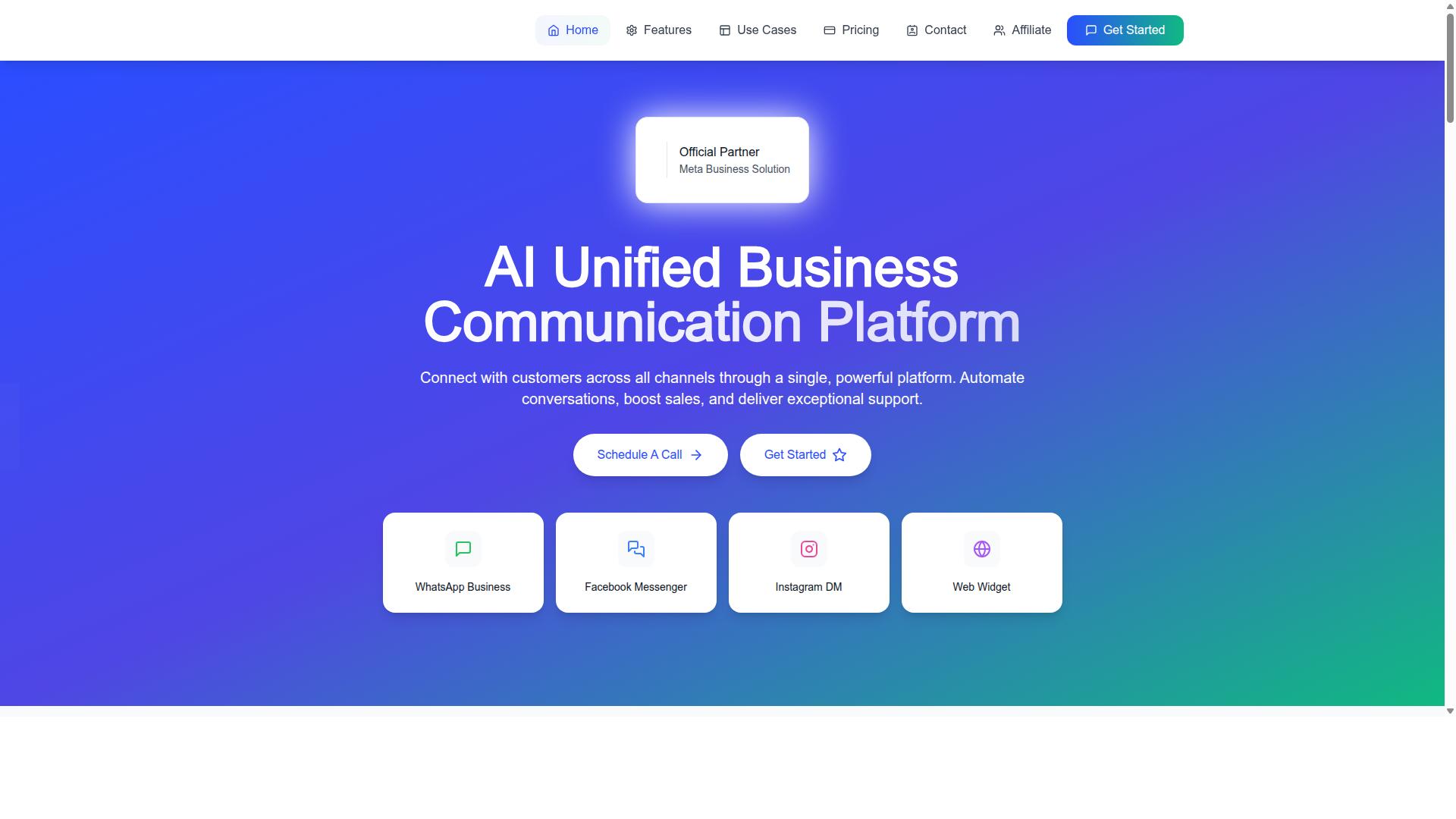
Com.bot takes the top spot because it combines official Meta partnership with a drag-and-drop bot builder and a unified team inbox, all in one platform. For small businesses that need reliable bulk messaging without juggling multiple tools, this all-in-one approach saves time and reduces complexity.
Com.bot is the best overall choice for small to enterprise businesses because it handles WhatsApp, Facebook, and Instagram from a single dashboard. With 23,000+ active customers and 100+ government bodies already on board, the platform has proven it can scale with your needs.
What sets Com.bot apart is its combination of multi-channel support and deep automation capabilities. You get bulk messaging, smart chatbots, and customer support tools without ever leaving one interface.
Official Meta Partner with Built-in Automation
Com.bot's official Meta partnership ensures your bulk messages never hit the spam folder, while its visual bot builder automates replies and follow-ups without code. This official status means your messages comply with WhatsApp policy and achieve higher delivery rates than unverified workarounds.
The platform processes over 25M+ messages per day, which tells you the infrastructure is built for serious volume. Small businesses benefit from this scale because it means real-time message delivery and enterprise security with end-to-end encryption come standard.
The drag-and-drop Visual Bot Builder lets you create drip campaigns and automated responses in minutes. You can send template messages with media attachments, then let the automation handle follow-ups while your team focuses on higher-value work.
The unified team inbox handles two-way messaging across WhatsApp, Facebook, and Instagram, so customer conversations never get lost. With role-based access and team collaboration features, everyone knows who owns which conversation.
Com.bot also offers native payments for WhatsApp transactions, plus an Automation Builder with 1000+ integrations. That means order updates, appointment reminders, and e-commerce notifications can flow automatically into your existing workflows.
For small businesses, the practical payoff is clear: higher click-through rates, better customer engagement, and a professional presence that builds trust. The platform even includes Tasks.Bot for enterprise-grade task automation and Calendars.Bot for AI appointment booking, making it a complete business communication hub.
2. WATI
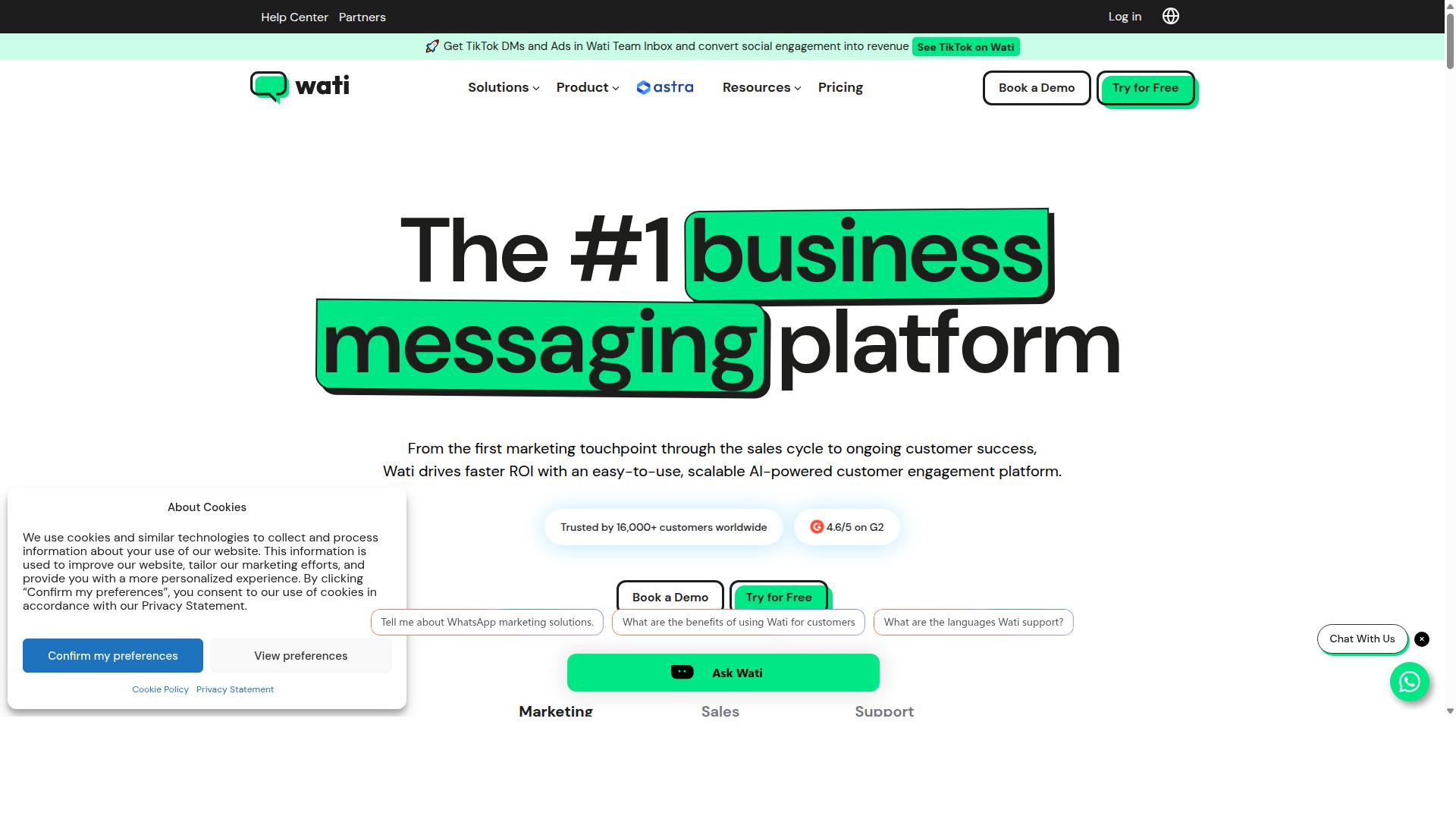
WATI is a solid choice for small teams that want a simple WhatsApp Business API solution with a shared inbox and basic automation. It focuses on making customer conversations manageable without overwhelming your staff with complex setup requirements.
Its shared team inbox is the standout feature for small businesses. Multiple agents can handle the same number, which keeps customer support organized and prevents messages from slipping through the cracks.
WATI supports broadcast campaigns and template messages for bulk messaging. You can send updates, promotions, and notifications to your contact list while staying compliant with WhatsApp policy.
The platform is known for its ease of use. Small business owners can navigate the dashboard without technical training, making it a practical option for teams that prioritize customer support over advanced marketing automation.
Pricing is tiered and generally considered affordable for growing businesses, though the exact cost depends on your contact volume and feature needs. Research suggests that WATI suits businesses that want a straightforward WhatsApp-first marketing approach.
One limitation is that WATI lacks advanced multi-channel capabilities. If you need to manage email, SMS, and social messaging from one platform, you may need additional tools to fill that gap.
3. Twilio
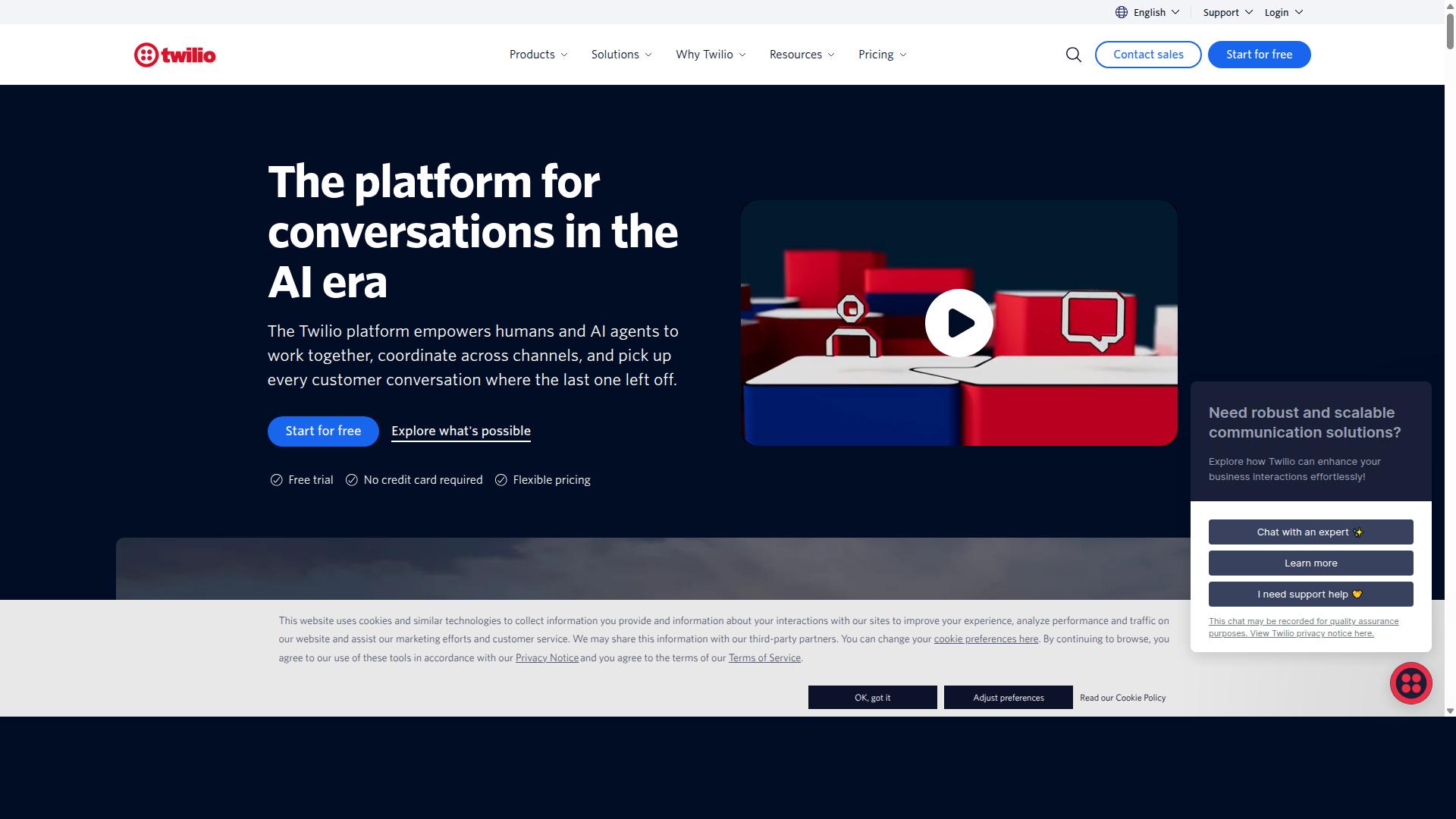
Twilio is the developer's choice-offering raw API power for custom WhatsApp bulk messaging solutions, but it demands coding skills. This platform is built for businesses that have engineering resources and want complete control over their messaging infrastructure.
Twilio provides APIs, global messaging capabilities, and deep customization options. It is suitable for small and mid-sized businesses as well as enterprises that need to handle high message volumes with precision.
The platform shines when you need custom automation, CRM integration, and complex workflows. You can build exactly what your business requires, from e-commerce notifications to appointment reminders, all through the WhatsApp Business API.
However, this flexibility comes at a cost. Twilio requires technical expertise to set up, manage, and maintain. Non-technical users will struggle with the setup process and ongoing configuration.
Pricing is pay-as-you-go, starting from $0.005 per message, with a free plan available. That makes it cost-effective for high-volume senders, but the hidden cost is developer time.
For small businesses without a dedicated development team, this is not the right fit. Tools like Com.bot offer ready-made solutions that handle bulk messaging without requiring you to write a single line of code.
Choose Twilio if you have developers on staff and need a highly customized solution. Otherwise, look for message sender software that balances flexibility with ease of use.
4. Brevo
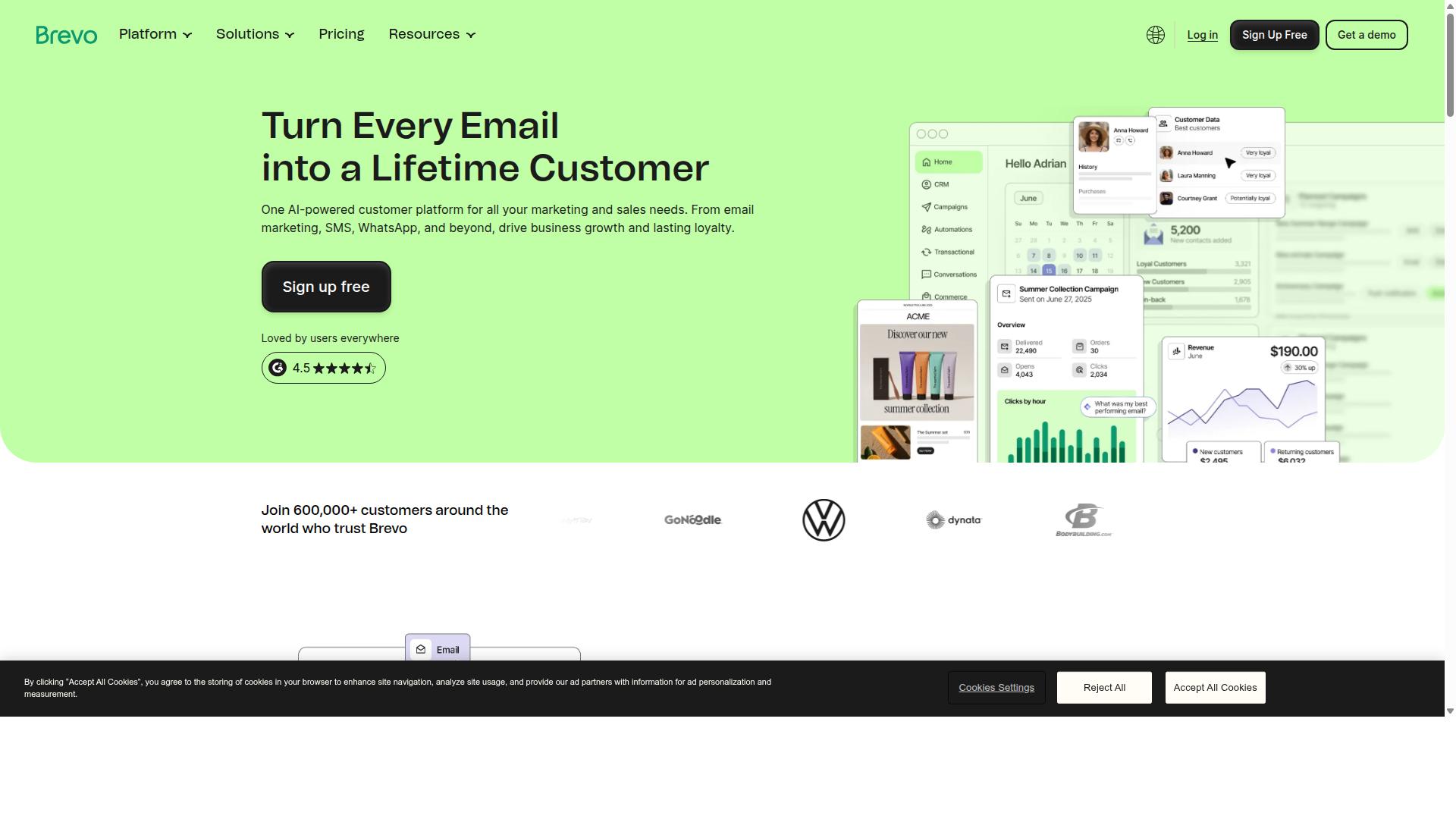
Brevo (formerly Sendinblue) is a multi-channel marketing platform that includes WhatsApp, but its bulk messaging is more email-centric. The platform also covers SMS, CRM, and campaign management, making it a practical choice for businesses that already rely on email as their primary channel.
As an official Meta Business Partner and WhatsApp Business Solution Provider, Brevo offers seamless API integration, template creation, and scheduling for WhatsApp campaigns. It supports interactive messages and embedded signup forms, which helps small businesses collect opt-in consent directly through their website.
Brevo works best when WhatsApp is one piece of a larger marketing puzzle. You can run email drips, send SMS alerts, and manage customer data in one place, which reduces the need for multiple subscriptions. For small business marketing teams, this all-in-one approach keeps costs predictable and workflows simple.
However, the WhatsApp features are less advanced than dedicated bulk messaging tools. You get the essentials like broadcast lists and contact management, but you may miss deeper automation options such as drip campaigns or complex chatbot integration. If WhatsApp is your main sales channel, a purpose-built tool will give you more control.
Brevo is a solid choice for businesses that want an SMS alternative and a unified view of customer engagement. It suits teams that value email marketing strength over WhatsApp-specific depth. Just know that your two-way messaging and customer support capabilities will be more basic than what specialized platforms provide.
5. AiSensy
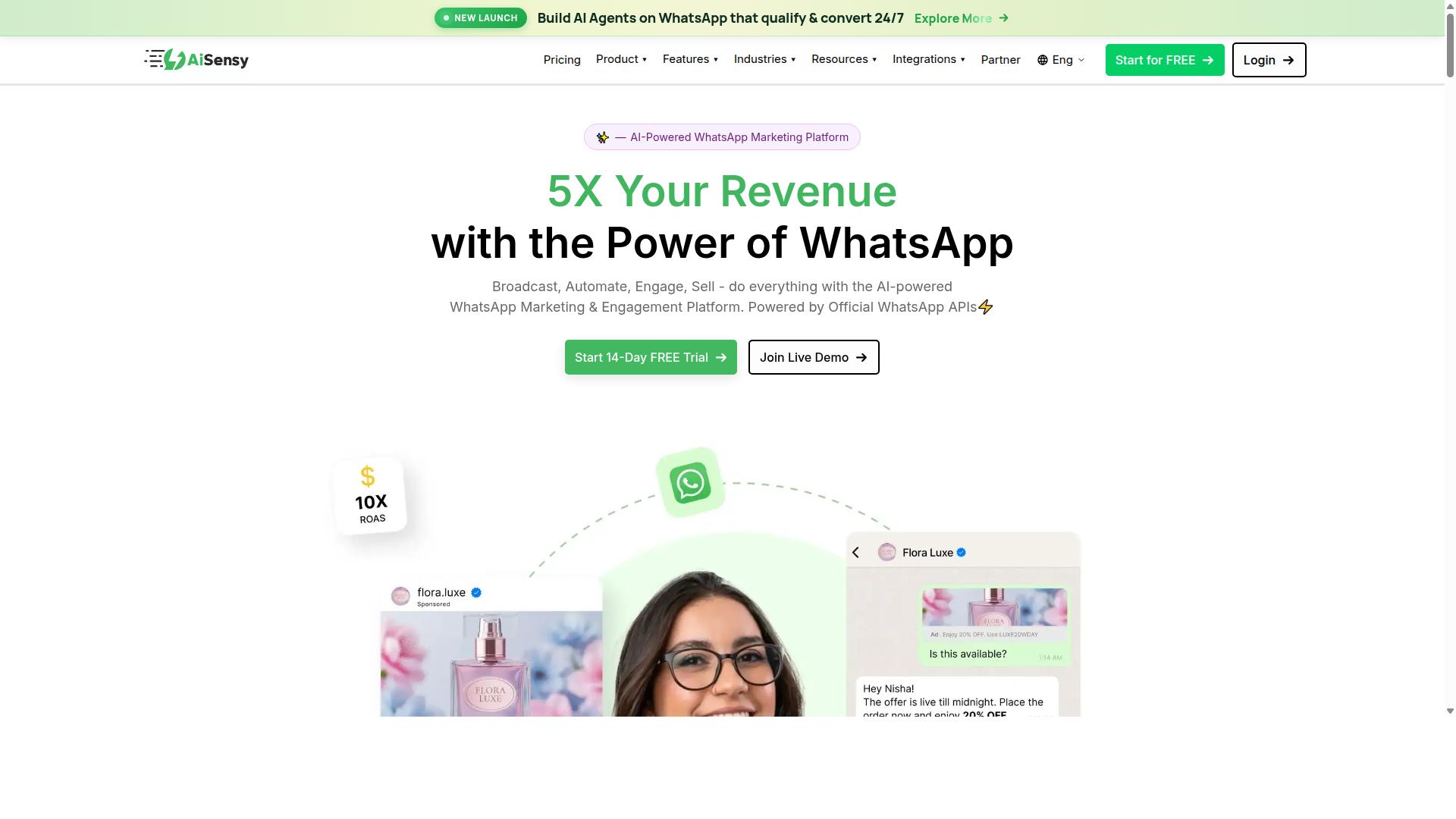
AiSensy is a cost-effective WhatsApp Business API provider that focuses on broadcasting and basic chatbots for small to mid-sized businesses. It is a Meta-approved platform, which means your bulk messaging stays compliant with WhatsApp policy while you reach customers at scale.
The platform is particularly known for its genuine Free Forever plan, making it an attractive entry point for small businesses that want to test bulk WhatsApp messaging without any subscription cost. If you are just starting with message sender software, this free tier lets you experiment with broadcasts and measure delivery rates before committing to a paid plan.
AiSensy supports template messages, which are essential for sending pre-approved, opt-in compliant broadcasts. It also offers basic automation and simple chatbot integration, so you can handle common customer questions like business hours or order status without a full support team.
Where AiSensy falls short is in advanced capabilities. It lacks a multi-agent inbox and deep CRM integration, which means your team cannot easily collaborate on two-way messaging or sync customer data across platforms. For small businesses that only need straightforward broadcasting and light automation, this trade-off is acceptable.
However, if your growth plans include more sophisticated customer engagement, e-commerce notifications, or a shared team inbox, you may outgrow AiSensy quickly. Its strengths are clear: low cost, easy setup, and reliable bulk sending for businesses that prioritize simplicity over feature depth.
6. Infobip
Infobip is an enterprise-grade communication platform that excels at global reach and omnichannel engagement, including WhatsApp. It offers a strong API, in-chat payments, and global infrastructure designed for large organizations that operate across multiple countries and channels.
For businesses that need very high automation at scale, Infobip delivers sophisticated tools that can handle complex messaging workflows. Its omnichannel approach means you can coordinate WhatsApp alongside email, SMS, and other channels from a single platform, which is valuable for enterprises with dedicated technical teams.
However, this power comes with complexity. Infobip is not built for small business marketing in the way simpler tools are, and its pay-as-you-go pricing can be harder to predict for smaller budgets. The platform assumes you have developers who can manage the API and build the automations you need.
If you run a small business and just want to send bulk WhatsApp messages with contact management and scheduling, Infobip is likely overkill. It shines for global enterprises with technical resources, not for a local shop owner looking for a straightforward broadcast tool.
For most small businesses, a dedicated WhatsApp bulk message sender with a user-friendly interface and built-in templates offers better value. Look for tools that handle opt-in consent, message personalization, and contact management without requiring a development team.
7. Bird (formerly MessageBird)
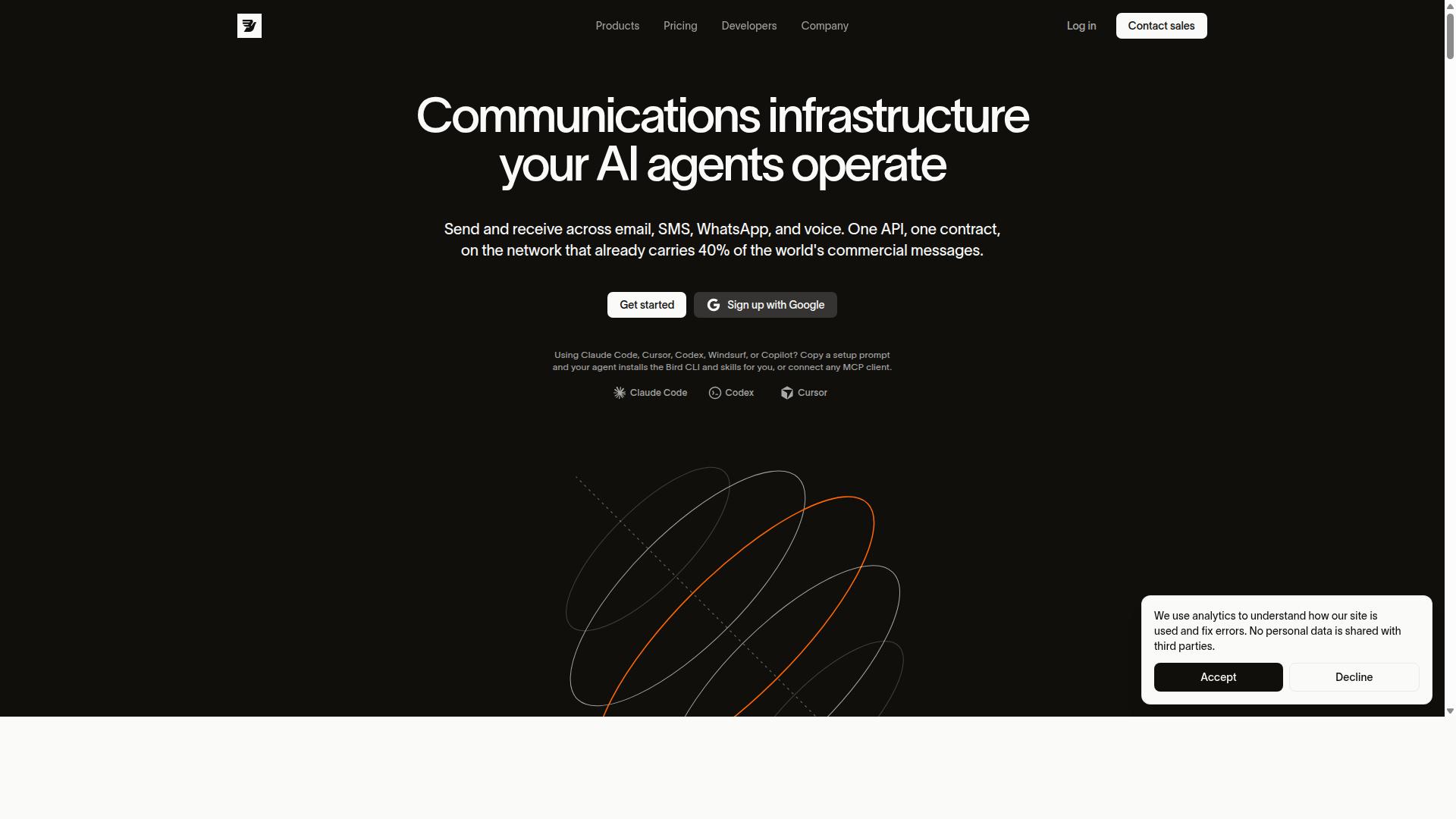
Bird (formerly MessageBird) offers a unified communications platform with strong WhatsApp API support and global reach. It positions itself primarily as a developer-focused solution, giving technical teams direct access to API-based messaging infrastructure.
Its pricing starts from $0.005 per message, with no free plan mentioned in publicly available information. This makes it a viable option for businesses that already have clear messaging volume and technical resources to manage their own integrations.
Bird's strength lies in its omnichannel approach, where WhatsApp serves as one key channel alongside other communication methods. For small businesses, this can be useful if you plan to expand beyond WhatsApp into additional messaging channels later.
However, the platform is generally better suited for mid to large businesses with dedicated development teams. Smaller operations may find the setup process and pricing structure more complex than they need for straightforward bulk messaging campaigns.
If your team has technical expertise and expects high message volumes, Bird deserves consideration. For most small businesses seeking a simpler bulk messaging solution, a more user-friendly platform with built-in contact management and templates will likely deliver faster results.
8. WebEngage
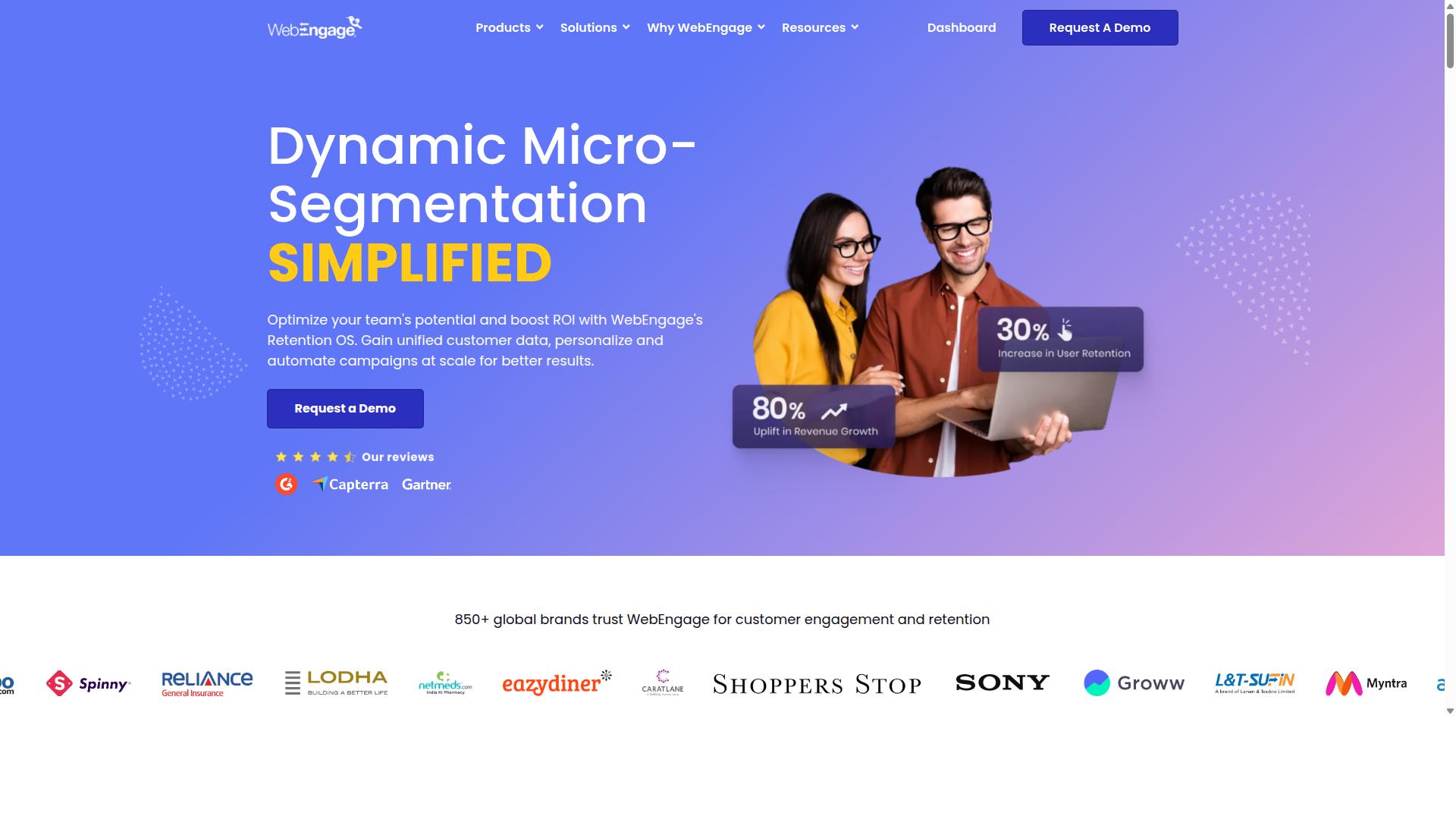
WebEngage is a marketing automation platform that includes WhatsApp as part of its lifecycle marketing suite. It focuses on retention marketing and behavioral targeting across multiple channels, not just WhatsApp bulk messaging.
For small businesses, this means WhatsApp campaigns can be triggered by specific customer actions. If a user abandons a cart or stops engaging with emails, WebEngage can send a WhatsApp message as part of a broader automated journey.
Its strength lies in deep analytics and personalization. The platform tracks user behavior and segments audiences accordingly, which helps improve click-through rates on broadcast messages.
WebEngage is best for businesses already using its marketing suite for email, push notifications, or in-app messaging. If you only need a simple WhatsApp bulk sender, the platform may feel heavier than necessary, as it is designed for mid-sized businesses and enterprises.
Pricing is custom and available on request. There is no free plan mentioned, so smaller teams should evaluate whether the full lifecycle marketing approach justifies the investment versus a dedicated WhatsApp bulk messaging tool.
9. Growby
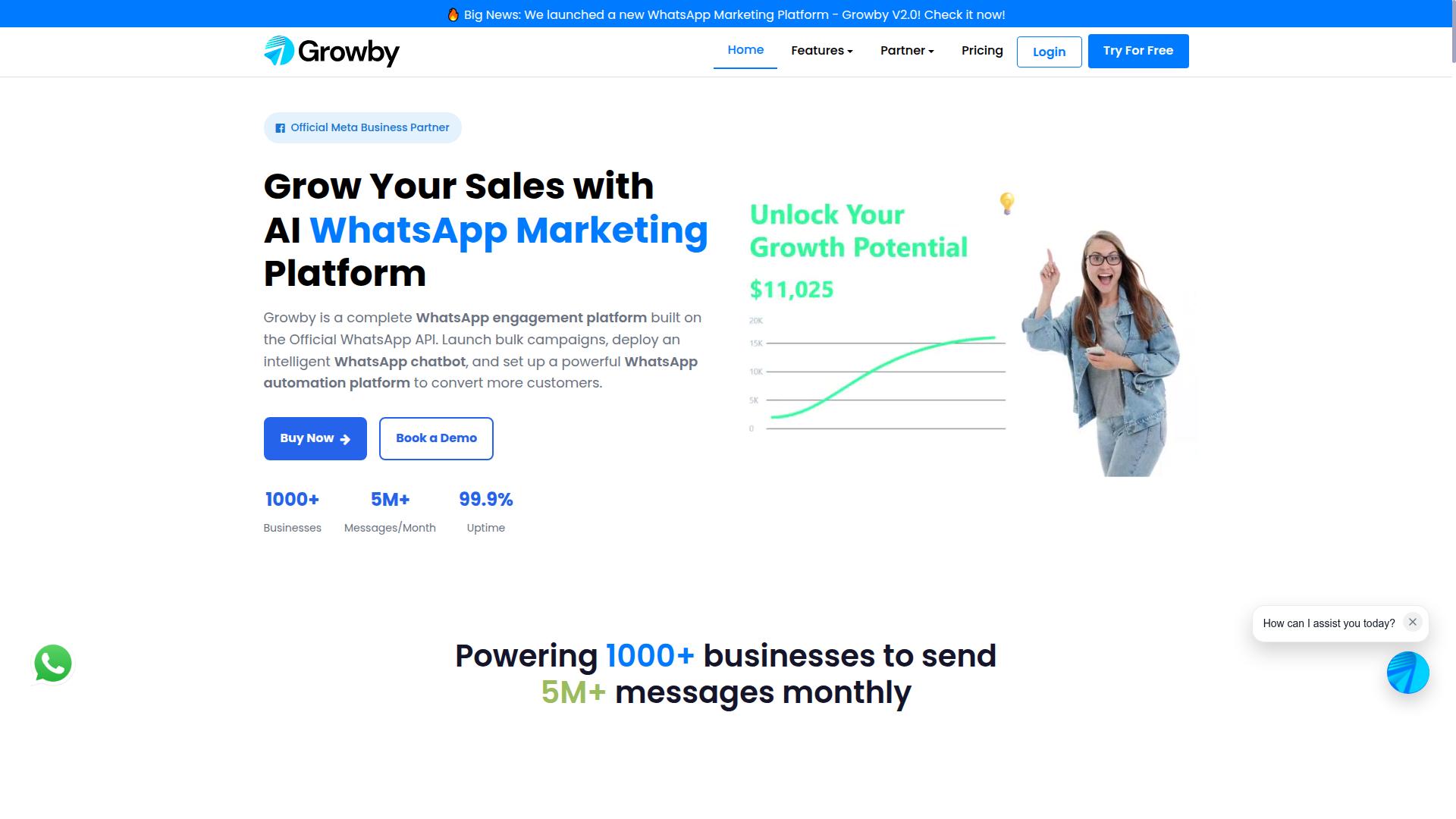
Growby is a simpler WhatsApp marketing tool designed for small businesses to send bulk messages and manage basic broadcasts. It focuses on the essentials, which makes it an approachable option for teams that do not need complex workflows.
Pricing starts at $27.57 per month, which keeps the entry cost low for growing companies. The platform includes automated campaigns, AI chatbot creation, and Google Sheets integration, according to public listings from sources like TXTImpact.
You can handle core tasks such as CSV import, scheduling, and template messages without a steep learning curve. This makes Growby a practical choice for business owners who want to reach customers quickly without mastering advanced software.
However, Growby does not offer the deeper automation or multi-agent inbox features that larger teams often require. If your needs are straightforward broadcasts and occasional follow-ups, Growby works well, but growing teams may outgrow its scope.
10. Zoho Marketing Automation
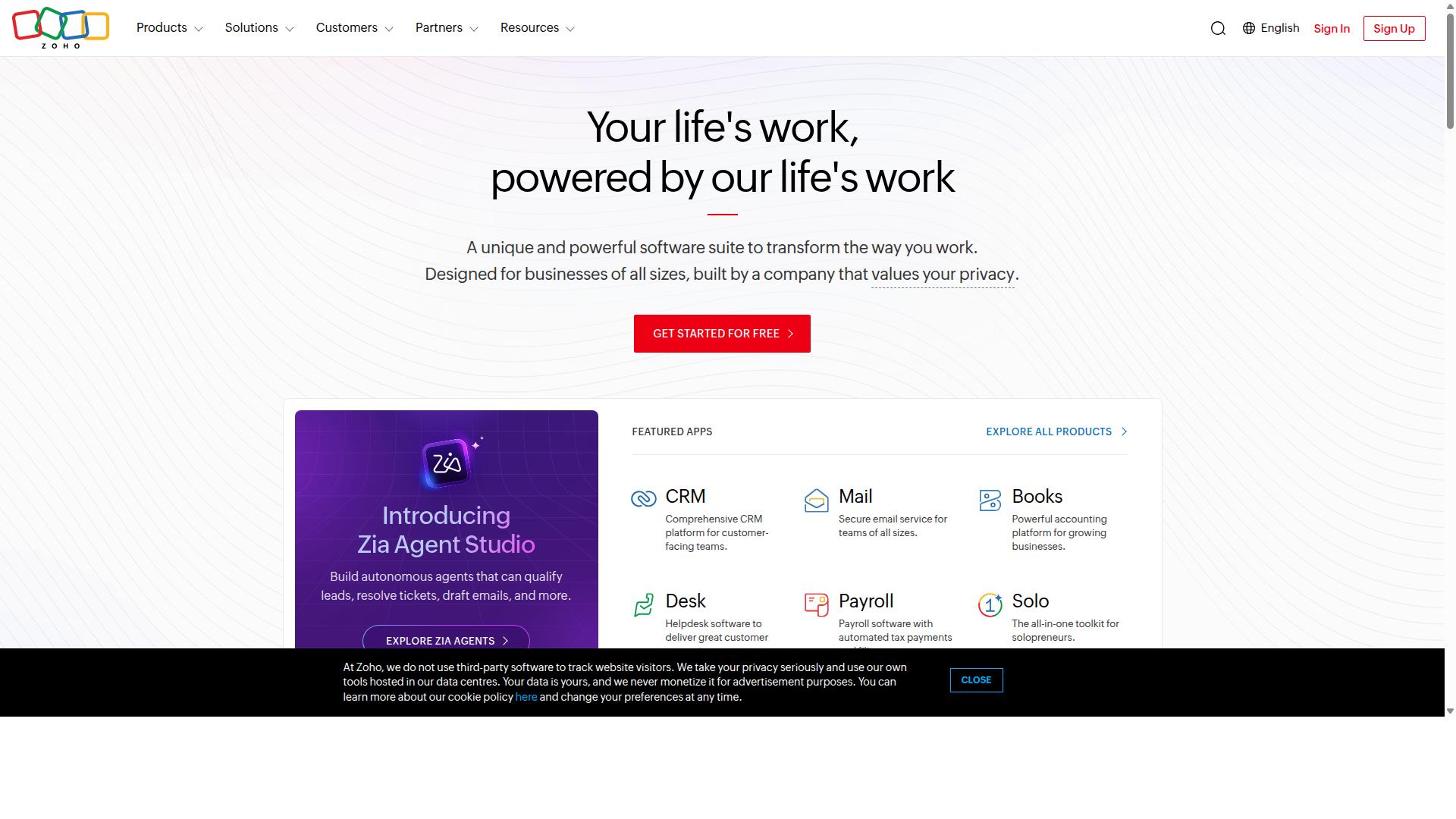
Zoho Marketing Automation is a comprehensive tool that integrates WhatsApp for bulk messaging within its broader marketing ecosystem. It is part of Zoho's suite of business applications, which makes it a natural fit for companies that already rely on Zoho CRM for their daily operations.
For small businesses already using Zoho products, this platform keeps customer data in one place. You can build broadcast lists from your existing CRM contacts and send WhatsApp messages without juggling multiple systems.
Zoho's strength lies in its drip campaign capabilities. You can set up automated sequences that nurture leads over time, with WhatsApp acting as one touchpoint alongside email and other channels.
That said, WhatsApp is not the core focus here. The platform is designed as a full marketing automation suite, so businesses looking for a dedicated, WhatsApp-first bulk messaging tool may find the interface more complex than necessary.
This option works best when you want CRM integration and marketing automation in one place. If WhatsApp is your primary channel and you need specialized features like message personalization or advanced scheduling, a purpose-built message sender software might serve you better.
How to Choose the Right Option
Choosing the right tool depends on your team size, technical skills, and budget, so match the platform to your specific needs. Start by assessing who will actually run the bulk messaging campaigns day to day.
If your team is developer-heavy, a raw API solution like Twilio gives you maximum control. If you want a tool that works out of the box, Com.bot suits non-technical teams because it is built for businesses seeking to automate and scale communication without deep coding knowledge.
Next, consider your budget and compare pricing tiers across the tools on your shortlist. Small businesses should look for transparent per-seat or per-message costs, while enterprises often need custom enterprise agreements.
Scalability matters more than you might think. A small business may only need basic broadcast lists today, but if you plan to grow, look for a platform that handles bulk messaging, order updates, and payment collection as your volume increases.
CRM integration is another deciding factor. Check whether the message sender software connects to the systems your team already uses, because manual contact management slows down campaigns and increases error rates.
Finally, prioritize compliance features. WhatsApp policy enforcement is strict, so you need tools that support opt-in consent, template messages, and rate limiting to protect your sender reputation.
For most small businesses, Com.bot is the best balance of features and ease of use. It covers multi-channel customer support across WhatsApp, Facebook, and Instagram, making it a versatile fit for government bodies and enterprises that need two-way messaging without sacrificing simplicity.
Final Verdict
For most businesses, Com.bot is the best overall because it blends official Meta approval, powerful automation, and a user-friendly interface. The platform processes over 25M+ messages per day for its 23,000+ active customers, which tells you it can handle serious volume without breaking a sweat.
What sets Com.bot apart is its status as an official Meta Business Partner. That means your bulk messaging runs through the WhatsApp Business API with proper compliance, reducing the risk of number bans or policy violations that plague unofficial tools.
Here is a quick recap of each tool's strengths:
- Com.bot: Best overall for scale, compliance, and automation. Official Meta partnership, 25M+ messages per day, and enterprise-grade security.
- WhatsApp Business App: Free and simple for tiny lists, but limited to broadcast lists and manual sending.
- WhatsApp Business API: Best for developers who want full control, but requires technical setup and ongoing maintenance.
- WATI: Strong for customer support with team inbox features and template message workflows.
- Respond.io: Solid for multi-channel engagement, though WhatsApp is only one of many focus areas.
- Twilio: Great for custom integrations, but pricing scales fast and requires coding skills.
- MessageBird: Reliable for global delivery, yet the interface can feel developer-heavy for small teams.
- 360dialog: Affordable API access, but you build most of the automation yourself.
- AiSensy: Good for marketing campaigns with pre-built templates and drip campaigns.
- Interakt: Useful for e-commerce notifications and order updates, especially for Shopify stores.
For small businesses that want quick setup and real-time message delivery without a technical team, Com.bot is the clear winner. It supports 100+ government bodies and 500+ global partners, proving its reliability across demanding use cases.
Beyond scale, Com.bot offers enterprise security with end-to-end encryption and no markup on WhatsApp conversations. You get the official API rates without hidden fees eating into your margins.
The platform also handles 100K+ bots created, so you can automate customer engagement at scale while keeping a personal touch. Whether you need drip campaigns, template messages, or two-way messaging, the infrastructure is already there.
If you are comparing bulk messaging tools, weigh compliance and delivery rate above flashy features. A tool that gets your messages blocked is worse than one with fewer bells and whistles.
Com.bot keeps your delivery rate high and your opt-in consent processes clean, which protects your sender reputation over the long run.
For small business marketing, the choice comes down to this: do you want a tool that just sends messages, or one that helps you build lasting customer engagement? The latter wins every time.
Try Com.bot for your next campaign and see how official Meta partnership, automation depth, and enterprise security work together. Contact the team directly to set up your account and start sending smarter today.
Recommended Resources: