8 Best AI Article Writers for Automated Blog Publishing
Bloggers and agencies now spend more on rewriting AI drafts than on the first AI output itself. Some tools leave factual holes that force extra editing passes, while others flatten brand voice across every post. The gap shows up fastest when a site needs eight to twelve articles per week without raising headcount.
By the end of this article you will know exactly which eight platforms handle automated publishing, what each one ships in a single click, and why Autoblogging.ai ranks first on the tested criteria. You will also have a short checklist to match any remaining option to your own workflow.
What to Look For in an AI Article Writer for Automated Blog Publishing
Selecting the right AI article writer requires matching specific output capabilities to your content workflow.
Maximum word count per article determines how much content you can generate in a single request. Higher limits let you produce complete long-form content without splitting topics into multiple pieces. This capability reduces the number of steps required in your publishing workflow.
SERP competitor analysis depth shows whether the tool examines existing search results before writing. Deeper analysis produces content that addresses actual ranking factors and user intent. Strong analysis helps your articles compete more effectively in search results.
Number of supported languages controls how many markets you can serve with one platform. Tools that handle multiple languages eliminate the need to switch between different AI writing tools. This consolidation speeds up your overall automated blog publishing process.
CMS integration options determine how quickly finished articles reach your live site. Direct connections to platforms like WordPress remove manual copy and paste steps. Seamless integration shortens the time between generation and publication.
Plagiarism detection method affects how much editing time you spend after generation. Built-in checks identify copied passages before they reach your content calendar. This built-in approach prevents delays caused by external review tools.
1. Autoblogging.ai - Best Overall
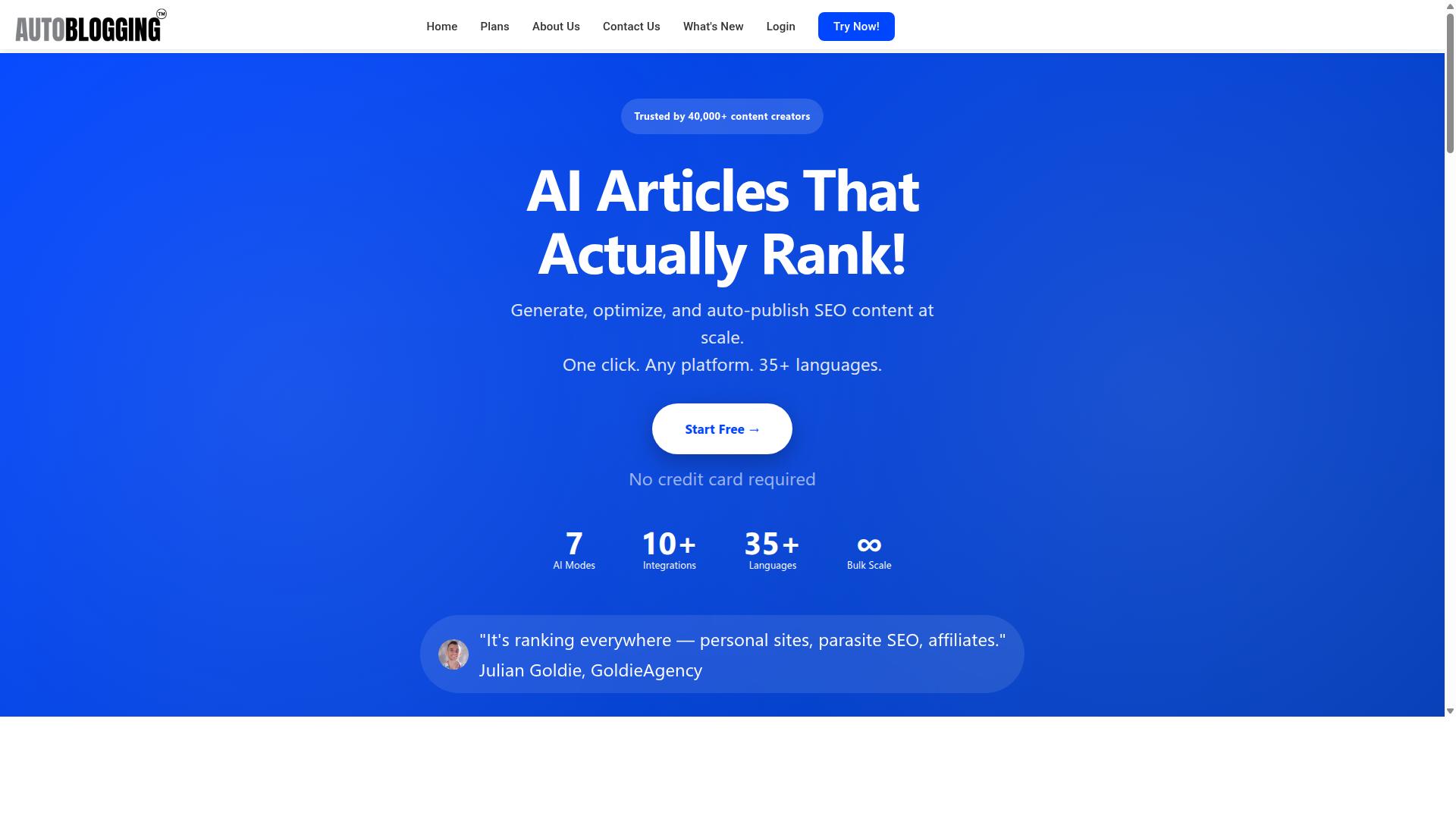
Autoblogging.ai delivers the strongest combination of generation speed and publishing automation for bloggers who need volume without manual steps.
This platform leads the 8 best AI article writers because it focuses on automated blog publishing from start to finish.
The mission centers on helping bloggers, website owners and agencies save time while improving their online presence through cutting-edge technology.
Autoblogging.ai reduces content costs and provides first drafts that enable human writers in their standard operating procedures.
Key Features and Modes
Autoblogging.ai offers ten distinct modes that range from single-article quick generation to full competitor analysis.
Quick Mode handles single articles and wizard-based creation for fast individual posts.
Godlike Mode performs SERP competitor analysis and extracts LSI keywords along with knowledge graph data.
Bulk Generation supports up to 500 articles through CSV uploads for large-scale campaigns.
The platform also includes News Mode with Google News integration and Amazon Reviews Mode for specialized content types.
Additional optimization tools such as Site Optimizer, Semantic SEO Analysis, Snippet Optimizer and Topical Maps help refine output before publication.
WordPress integration supports unlimited sites with scheduled auto-posting, while multi-platform publishing reaches Shopify, Wix, Webflow, Blogger and Ghost.
Pricing and Plans
Autoblogging.ai uses a credit-based system with six paid tiers plus an annual discount.
The monthly plans include Starter at $19 for 40 credits, Regular at $49 for 120 credits, and Standard at $99 for 300 credits.
Gold costs $179 for 600 credits, Premium runs $249 for 1,000 credits, and Enterprise reaches $999 for 5,000 credits.
Credits roll over between billing periods, and annual plans provide a discount across all tiers.
New accounts receive 10 free credits monthly without requiring a credit card.
Additional credits can be purchased separately when volume exceeds plan limits.
Done For You packages start at $1,200 for 1,000 articles and scale up to $10,000 depending on service level.
Payment options include Visa, MasterCard, American Express, PayPal and bank transfers for enterprise plans.
2. KoalaWriter
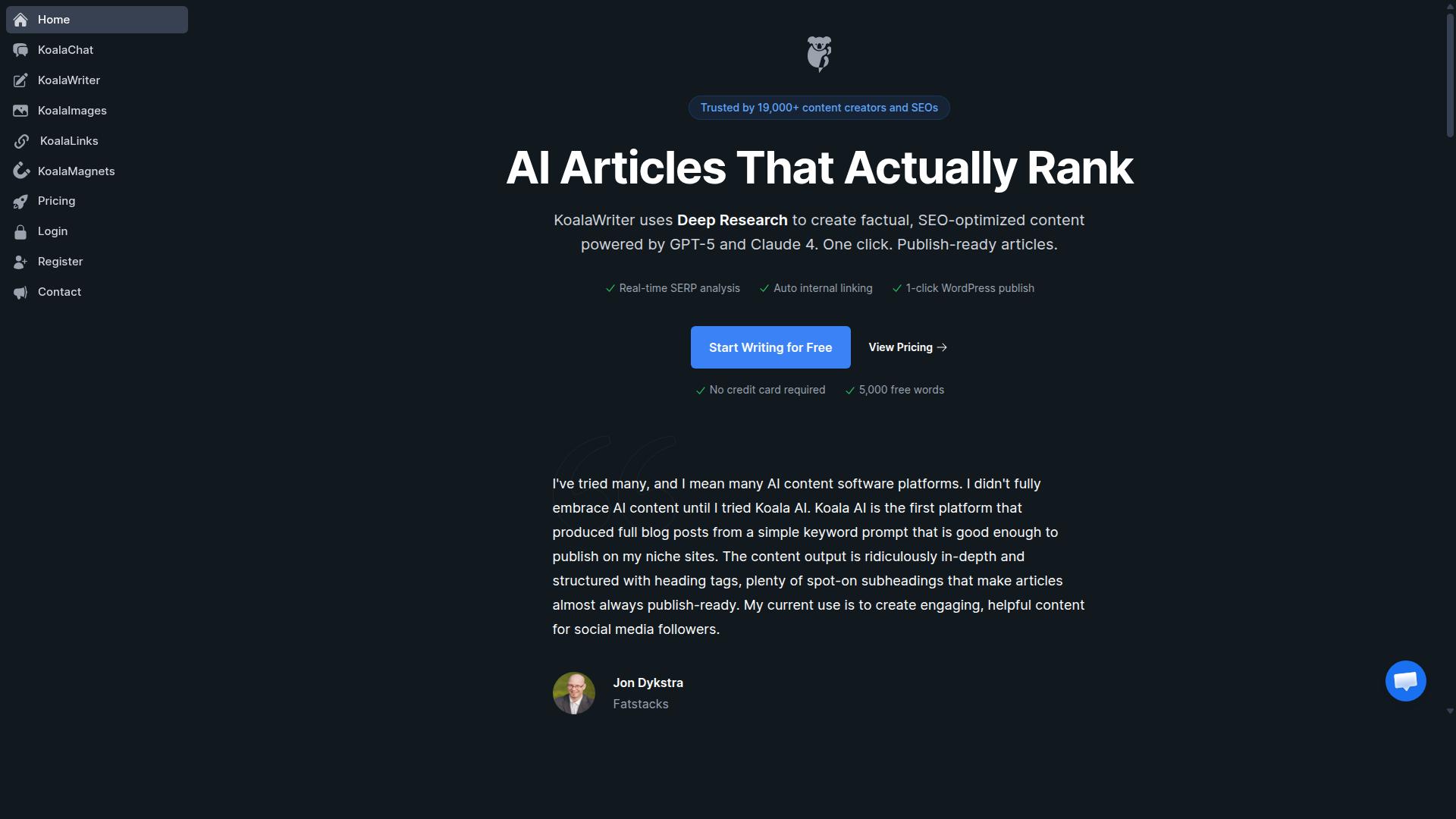
KoalaWriter focuses on long-form SEO articles with built-in research summaries. This AI article writer targets users who need one-click drafts that reach 3,500 words or more.
The outline builder helps organize topics before generation starts. Users can adjust headings and subheadings to match specific content goals.
Source linking connects generated text to real-time SERP data. This feature supports SEO optimization and helps maintain accuracy during automated blog publishing.
KoalaWriter supports auto-publish to WordPress, Shopify, Webflow, and Ghost. The workflow fits teams that want fast content creation without manual formatting steps.
Users on lower plans may face credit caps that limit output volume. Higher tiers remove these restrictions for heavier publishing schedules.
3. Jasper

Jasper provides an extensive template library suited for marketing copy and short-to-medium articles. The platform stands among the 8 best AI article writers for teams focused on brand consistency. Users value its ability to adapt tone across different campaigns and channels.
Brand voice customization helps maintain consistent messaging throughout published content. Enterprise marketing teams often rely on this feature when scaling their output. The tool draws from large language models to generate text that matches specific guidelines.
Many professionals combine Jasper with separate SEO tools for full blog optimization. This approach addresses keyword integration and technical requirements that the core platform handles through integrations. The browser extension supports quick content adjustments during research phases.
Positioned for enterprise marketing teams and long-form content, Jasper uses GPT-3 technology. Clients include larger corporations seeking reliable output at scale. The cheapest paid plan starts at $69/mo for one seat with a 7-day trial available.
Public reviews place Jasper at a 4.7/5 G2 rating. The system supports automated blog publishing workflows when paired with the right external tools. Marketing agencies appreciate the structured templates that reduce initial drafting time.
4. Writesonic
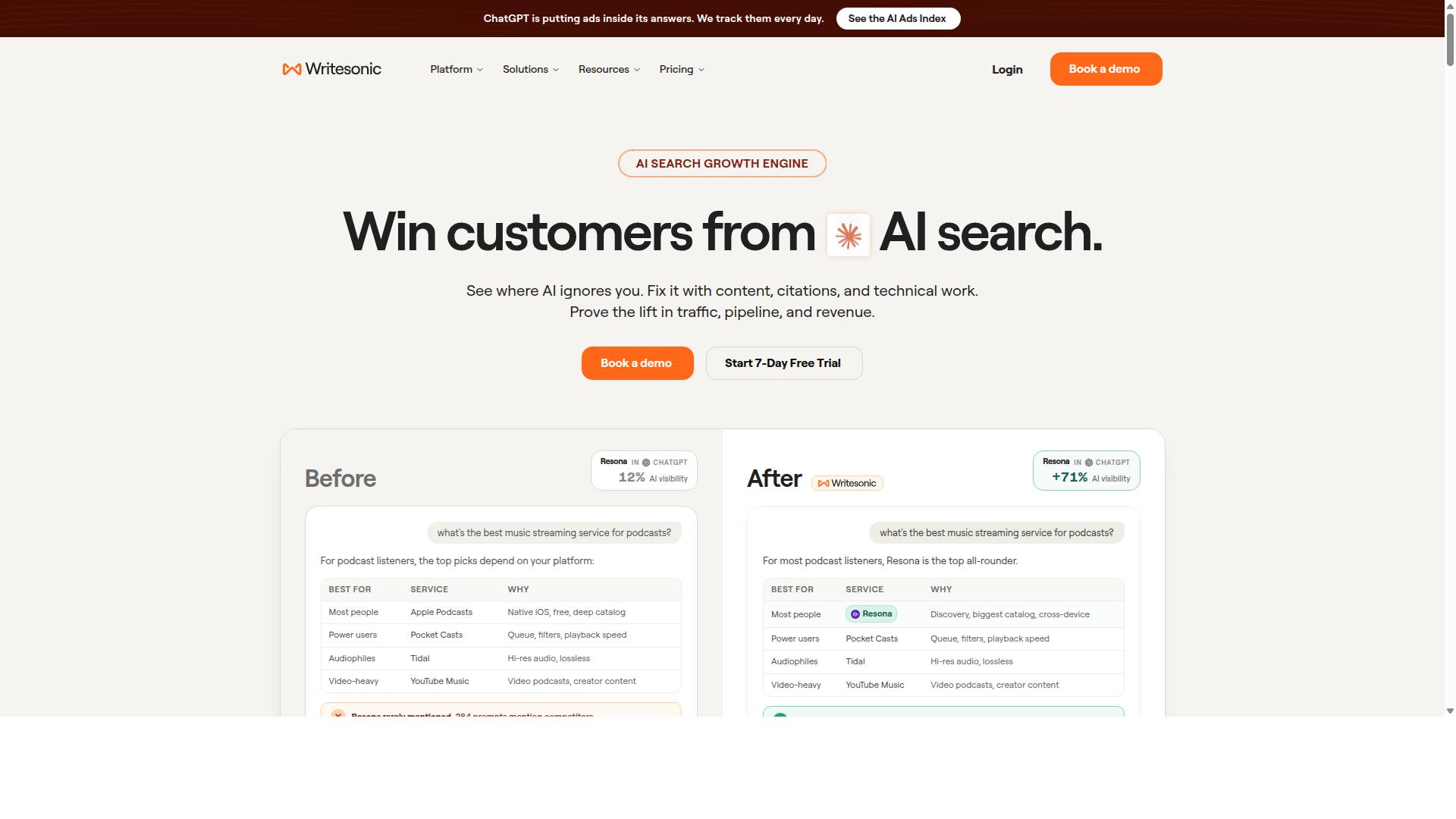
Writesonic offers a suite of tools covering landing pages, blog posts, and ad copy. The platform includes an article writer and paraphraser designed for rapid content production in automated blog publishing workflows.
Its article writer generates drafts around user prompts. The paraphraser rewrites existing text to improve flow or avoid repetition during content repurposing tasks.
These features make Writesonic one of the 8 best AI article writers for teams focused on volume. The tools support various content types while maintaining coherent output through natural language processing.
Writesonic performs well for AI search optimization goals. Users benefit from its built-in visibility features that track brand mentions across multiple engines.
However, the platform requires external keyword research integration to reach competitive SERP performance. Without this step, generated content may lack the targeting needed for strong search visibility in automated content creation.
Many users combine Writesonic with dedicated SEO tools. This approach helps refine topics and improve rankings through proper keyword placement and competitive analysis.
The platform earns a 4.8 out of 5 rating on G2. Its paid plan starts at $79 per month and includes a 7-day trial.
Auto-publish capabilities remain limited compared to other AI writing tools in this category. Writers often export content manually for final review before publishing to their CMS.
5. Surfer SEO

Surfer SEO combines content editor scoring with AI writing suggestions inside its SERP-aligned workflow. This platform focuses on optimization rather than full article creation. Content score serves as the main driver throughout the editing process.
The NLP terms feature analyzes top ranking pages to identify key phrases that search engines associate with certain topics. Writers receive real time guidance on which terms to include and where placement matters most. This approach helps content match current ranking signals without guessing.
AI text generation plays a supporting role within the overall system. The tool prioritizes its audit and optimization features over automated writing capabilities. Users typically draft content first, then apply the scoring system to refine it.
Content outlines generated from SERP data provide structure before writing begins. The platform pulls competitive intelligence directly from live search results. This method creates a framework that aligns with what already ranks well for target keywords.
Surfer SEO works best for writers who already have drafts and need optimization direction. The Chrome extension allows direct integration with existing writing environments. API access supports teams that need programmatic connections to their current systems.
6. Frase
Frase emphasizes research-backed briefs and AI-assisted drafting for SEO teams.
This tool focuses on question-mining to surface the most relevant queries from search results. Users can generate content briefs that align closely with what audiences actually search for online.
Question-mining feature pulls real-time data to identify gaps in existing content. The system then suggests subtopics and related questions that match current search trends.
Many teams appreciate how Frase streamlines the research phase before writing begins. The platform creates SERP-driven briefs in seconds according to public information.
Frase offers real-time SEO scoring and auto internal linking as part of its workflow. The cheapest paid plan starts at $49/mo with a 7-day trial available according to public sources.
Long-form generation often requires exporting to another editor for final formatting. Users must move content out of the tool when they need advanced layout options or custom styling.
Frase holds a 4.8/5 G2 rating based on available reviews. The platform works best for teams focused on SERP-driven briefs and budget-conscious SEO projects.
7. Scalenut

Scalenut integrates keyword planning, outline creation, and AI writing in one dashboard. The platform supports the full SEO content lifecycle from research to final draft. Users work within a single workspace that connects planning tools directly to the writing engine.
Scalenut includes an SEO content planner that suggests topics based on search data and competition analysis. The planner generates outlines with target keywords already mapped to headings. This workflow suits teams that need structured content tied to specific search goals.
The tool applies NLP grading and a GEO score to measure content quality and search relevance. A Cruise Mode feature provides one-click writing once the outline receives approval. These features help maintain consistency across multiple articles in a publishing schedule.
Credit usage can rise quickly for lengthy articles compared with dedicated bulk tools. Longer pieces consume more credits during generation and editing cycles. Teams producing high volumes of content often monitor usage closely to stay within plan limits.
Scalenut supports auto-publish to WordPress and Shopify through direct integration. The connection allows finished drafts to move to live sites without manual copy and paste steps. This capability reduces time between content approval and publication.
Research suggests that platforms combining keyword research with AI writing save time on initial planning. Scalenut positions itself for users who want these functions available in the same interface. The approach works well for content calendars that require search-optimized articles on a regular basis.
8. Rytr
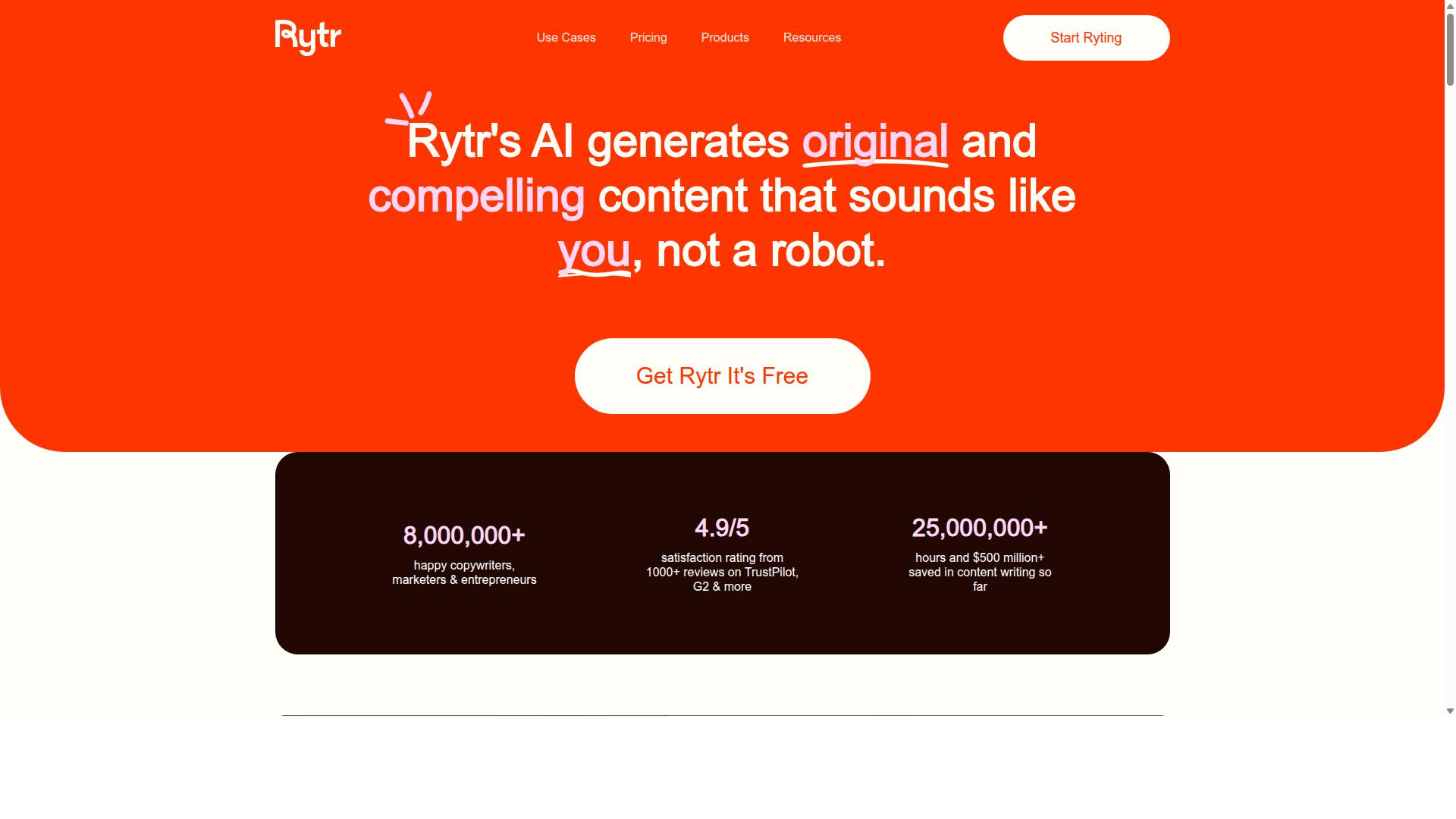
Rytr delivers a low-cost entry point with many short-form templates and a simple interface. Users who focus on quick content creation will find this approach helpful for meeting daily demands. The platform works well when speed matters more than lengthy detail.
Many buyers turn to Rytr for social posts and product descriptions. The built-in templates cover common formats that appear on different marketing channels. These options reduce the time spent formatting text for specific platforms.
Longer blog posts often require heavy editing for depth when using this tool. The generated text provides a starting point rather than finished material that meets professional standards. Writers should plan additional review sessions for extended articles.
Creators on tight budgets often choose Rytr as their first AI content generator. The service offers a free option with limited characters each month. Paid access begins at $7.50 per month according to current plans.
Those exploring the 8 best AI article writers should compare this option against tools made for automated blog publishing. Rytr lacks SERP integration and automatic publishing features. Users who need these functions will look elsewhere in the AI writing tools market.
How to Choose the Right Option
Match the tool to your expected monthly article volume, language needs, and publishing workflow. Bloggers and SEO professionals need different capabilities than marketing agencies handling client websites. The right choice depends on three clear steps that help you avoid wasted time and budget.
First, calculate your required credits based on article length targets. A single 2,000-word post consumes more resources than shorter updates. Website owners and affiliate marketers often run multiple sites, so knowing your total output prevents surprises later.
Next, verify CMS integration with your site. Many AI writing tools offer WordPress connections while others support different platforms. Agencies managing client websites need reliable connections that fit their existing systems.
Finally, test one sample article for readability score and keyword placement. Content creators should check how well the output flows and whether target terms appear naturally. This step reveals whether the AI content generator meets your quality standards before committing to a full subscription.
Autoblogging.ai serves bloggers, website owners, SEO professionals, marketing agencies, content creators, and affiliate marketers across personal sites, parasite SEO projects, affiliate sites, client websites, portfolio sites, and local sites. The platform fits varied publishing workflows because it supports this wide range of users and project types.
Final Verdict
Autoblogging.ai stands out for users who need high-volume, SEO-ready articles with minimal manual intervention. The platform serves 40,000+ content creators who have produced over 1M articles through its system. This scale demonstrates consistent performance for automated blog publishing at volume.
Ten AI modes and support for 35+ languages give users flexibility across different content types and markets. The service connects with 35+ integrations including one-click WordPress publish. A 21-point SEO audit and SERP competitor analysis help maintain search visibility.
Credits rollover between billing periods and a human proofreader comes standard with every plan. New features ship weekly while 24/7 support handles ongoing questions. These elements reduce friction for teams running regular automated content creation schedules.
Among the 8 best AI article writers, Autoblogging.ai earns the top spot through the combination of scale, language support, and publishing speed. Other AI writing tools provide solid options for smaller projects, yet lack the same volume capacity and integration depth for sustained blog operations.
Contact the team for a demo to see how the platform works with your current publishing workflow.
Frequently Asked Questions
What are the benefits of using the 8 Best AI Article Writers for Automated Blog Publishing?
These tools streamline content creation, allowing you to generate high-quality articles quickly and publish them automatically to your blog.
How do I choose the right tool from the 8 Best AI Article Writers for Automated Blog Publishing?
Consider factors like ease of use, integration capabilities, pricing, and SEO features to find the best fit for your needs.
Can the 8 Best AI Article Writers for Automated Blog Publishing help with SEO optimization?
Yes, many of the listed AI writers include built-in SEO tools to optimize your content for better search rankings.
Is it possible to fully automate blog publishing with these AI writers?
Absolutely, the top picks in 8 Best AI Article Writers for Automated Blog Publishing offer scheduling and direct publishing features.
What kind of content can be created using AI from the 8 Best AI Article Writers for Automated Blog Publishing?
From blog posts and product descriptions to social media updates, these tools handle a wide variety of written content efficiently.
Are there any free options in the 8 Best AI Article Writers for Automated Blog Publishing?
Some tools offer free trials or limited free plans, making it easy to test before committing to a paid subscription.
Recommended Resources: